
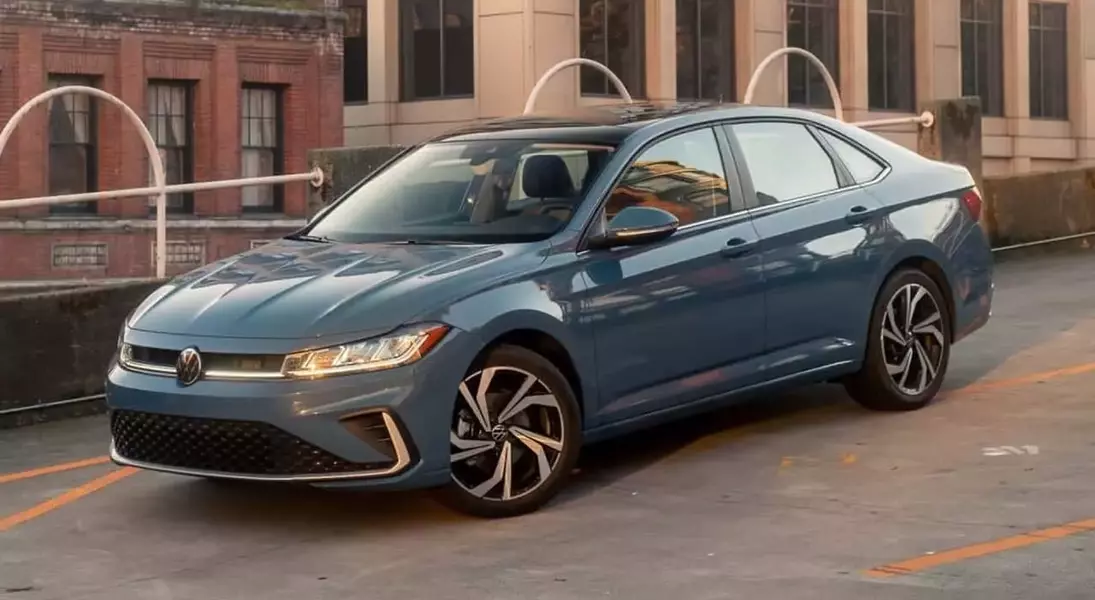
The Volkswagen Group is embarking on a significant strategic overhaul, aiming to drastically reduce its diverse model range. The company has announced plans to cut its current vehicle portfolio by as much as half by the year 2030, a move driven by a strong focus on cost reduction and enhanced profitability. This shift is poised to impact several familiar models, with German media outlets already circulating a preliminary list of vehicles slated for discontinuation.
Volkswagen Group Trims Down Product Offerings
In a bold strategic move aimed at optimizing its global operations, the Volkswagen Group is reportedly set to eliminate a substantial portion of its current vehicle lineup. While the company has refrained from publicly naming specific models, an internal report from the German newspaper Bild, dated July 13, suggests that a total of ten vehicles are currently under review for potential discontinuation. This initiative aligns with the Group's broader strategy to reduce complexity and improve financial performance, with an ambitious goal of slashing its model variants by 75% by the end of the decade. Concurrently, the annual production capacity is projected to decrease from 10 million to 9 million units.
Among the models reportedly facing the chopping block within the core Volkswagen brand are the Jetta sedan and the Taos crossover. While the Taos's departure might not cause widespread concern, the Jetta's potential exit is notable, given its nearly 40-year legacy as a company mainstay. Despite the general decline in sedan demand, competitors like Honda and Toyota have continued to find success in this segment, making the Jetta's rumored demise a significant indicator of VW's aggressive cost-cutting measures. The ID.5, an electric model, has also been hinted at for discontinuation in previous reports.
Porsche's high-performance lineup is also expected to see significant changes. The all-electric Taycan, despite its innovative design, may not receive a direct successor after its current generation concludes, reportedly due to slower sales. Additionally, the combustion-powered Cayenne Coupe is said to be nearing the end of its production cycle. A particularly impactful rumor is the potential cancellation of the gasoline-powered 718 Boxster and Cayman models. This comes as a surprise, especially after Porsche had indicated a return for internal combustion engines in these top-tier sports cars. However, it appears the fully electric 718s are still very much in development, hinting at a clear shift towards electrification for the brand's two-door sports cars.
Audi, another prominent brand within the VW Group, is also reassessing its offerings. While relatively new to the market, the Audi Q5 Sportback and the electric Q6 E-Tron Sportback crossover coupes are reportedly unlikely to see future generations, following the recent end of production for the A1 Sportback and Q2. However, Audi is also preparing for new introductions, including the flagship Q9 SUV and the A2 electric supermini this year, with a two-door targa sports car based on the Concept C expected in 2027.
The long-standing Skoda Fabia is another vehicle rumored to be facing retirement. This decision reflects the increasing challenges of maintaining profitability for small, combustion-engine cars in Europe, as stringent emissions regulations push up production costs. While the fate of its sister models, the VW Polo and SEAT Ibiza, remains uncertain, it underscores a broader industry trend away from non-electrified subcompact hatchbacks.
The Cupra Raval, a relatively new model, is also mentioned as potentially being discontinued after just one generation. Such a rapid decision, if true, highlights the extreme nature of the VW Group's shake-up, suggesting an unwillingness to wait for market performance before making significant portfolio adjustments.
Interestingly, luxury brands like Lamborghini and Bentley are conspicuously absent from the rumored list of cuts. This is largely attributed to their smaller, highly profitable lineups, which allow them greater flexibility. Both brands have already made strategic decisions independent of the broader Group's rationalization, with Lamborghini delaying its first EV launch and Bentley abandoning its all-electric by 2035 goal. Bugatti, having recently severed ties with the VW Group, is also unaffected.
According to Bild, these strategic model cuts could result in an estimated savings of €6.5 billion (approximately .4 billion) by 2031. This substantial figure underscores the Volkswagen Group's commitment to financial efficiency and strategic focus, even if it means bidding farewell to some iconic and newer models across its diverse automotive empire.
The Volkswagen Group's decision to streamline its model portfolio, potentially eliminating popular vehicles like the Jetta and even the Porsche Taycan, marks a pivotal moment for the automotive giant. This move signals a resolute commitment to profitability over sheer volume, reflecting the intense pressures of evolving market demands, regulatory shifts, and the high costs associated with electrification and new technologies. While some enthusiasts may mourn the loss of beloved nameplates, this strategic reorientation is a stark reminder that even well-established models must prove their financial viability in a rapidly changing industry landscape. It underscores a future where automotive success will be increasingly defined by efficiency, technological focus, and shrewd resource allocation.