The USDA and the EPA are funding campaigns to cut at-home food waste, but a trash bin full of challenges remains.
Tackling Food Waste: Empowering Consumers to Reduce Household Waste
In a world where food waste has become a staggering global issue, a growing number of public officials are embracing a unique approach to address this challenge. Lesly Baesens, the food waste czar for the city of Denver, is at the forefront of this movement, leading a team that has been meticulously analyzing the contents of residents' garbage cans in a process known as "waste auditing." Through this hands-on approach, Baesens and her team are uncovering valuable insights that are shaping their efforts to ensure that groceries end up consumed rather than discarded.Empowering Consumers to Reduce Household Food Waste
Measuring and Addressing the Problem
Baesens and her team have launched a series of consumer-focused campaigns aimed at tackling the issue of food waste head-on. Each campaign follows a similar structure: first, they measure the amount of food being wasted, then they provide households with various materials and tools to reduce food waste, and finally, they measure the impact of these interventions. This data-driven approach allows them to identify the most effective strategies for curbing food waste in the home.The significance of this work cannot be overstated, as experts estimate that 40 percent of food waste occurs within American households. By targeting consumers directly, Baesens and her team are at the forefront of a growing trend that has seen other countries, cities, states, and nonprofits in the U.S. experiment with similar campaigns, all with the goal of preventing waste through increased awareness and education.The Magnitude of the Food Waste Challenge
The problem of food waste is truly staggering in scale. In the United States alone, approximately 35 percent of all food produced is thrown away before it is even consumed. The environmental impact of this waste is equally alarming, with the production of this uneaten food resulting in annual greenhouse gas emissions equivalent to that of 42 coal-fired power plants.Once this food waste ends up in landfills, it produces 58 percent of the methane emissions from these sites. Despite a national goal set in 2015 to cut food waste in half by 2030 – a crucial milestone for slowing the pace of climate change – progress has been slow, with food waste actually increasing in recent years, with only a slight dip in 2022.A National Strategy to Tackle Food Waste
In response to this lack of progress, the Biden administration unveiled a national strategy in June 2022 to reduce food waste. This comprehensive plan includes efforts to prevent waste in grocery stores and schools, increase composting infrastructure, and promote food donation. Crucially, the strategy also emphasizes the importance of consumer awareness and education campaigns, recognizing the significant role that households play in the food waste challenge.To support this initiative, the U.S. Environmental Protection Agency (EPA) is investing million to develop a national consumer campaign, while the U.S. Department of Agriculture (USDA) is simultaneously spending .5 million to fund a research project on effective campaign strategies. This federal investment underscores the growing recognition that empowering consumers is a key component in the fight against food waste.Lessons from the Past and Insights for the Future
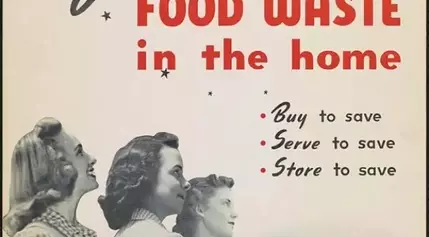
The federal government's involvement in this effort is not without precedent. During World War I and World War II, the USDA ran various campaigns encouraging Americans to reduce food waste as part of the war effort. Now, as the nation faces the pressing challenge of climate change, the government is once again turning to consumers as a crucial part of the solution.As the USDA's Agriculture Secretary Tom Vilsack noted, the agency can draw on its experience in helping farmers adopt climate-friendly practices, which have often benefited their bottom line in the long run. "We can do the same thing with folks in their homes," Vilsack said, "We can make the case that by being conscious of food loss . . . you can actually save money."However, experts caution that while consumer campaigns have the greatest potential to cut food waste and related emissions, the evidence to support their effectiveness is still emerging. Furthermore, even if these campaigns prove successful, there are still questions about which messages resonate most with different populations and how to tailor those messages accordingly.Ultimately, to truly move the needle on food waste, many experts believe that consumer-focused campaigns must be implemented in tandem with efforts to address the structural causes of food waste at home, such as confusing expiration date labels – many of which require policy changes to address.As the nation embarks on this ambitious journey to reduce food waste, the work of Lesly Baesens and her team in Denver, along with the federal government's renewed commitment, offer a glimmer of hope that a future with less food waste and a healthier planet is within reach.