Lifestyle
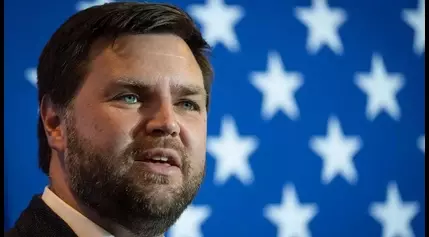
Vance's Controversial Stance on Childless Americans: A Divisive Debate
J.D. Vance, the recently minted GOP vice presidential nominee, has found himself at the center of a heated controversy over his past comments regarding adults without children. Vance's remarks, which have been described as disparaging and insensitive, have sparked intense backlash, particularly from influential Hollywood circles. As the 2024 election cycle heats up, Vance's rhetoric has become a focal point, raising questions about his suitability for the role and the broader implications of his views on family and society.Challenging the Status Quo: Vance's Provocative Perspective
Questioning the "Childless Leadership Class"
In a resurfaced clip from 2021, Vance argued that the country is being "run by 'childless cat ladies' to the detriment of U.S. politics." This controversial statement has drawn significant attention, with many questioning the senator's underlying assumptions and the potential implications of such rhetoric. Vance's assertion that the "childless leadership class" is detrimental to the nation's well-being has sparked a heated debate, with critics accusing him of perpetuating harmful stereotypes and dismissing the valuable contributions of individuals without children.Labeling the Childless as "Sociopathic"
Vance's comments have become even more contentious with the emergence of a 2020 podcast clip in which he claimed that adults without children, particularly those in the "U.S. leadership class," are "more sociopathic" than parents. This inflammatory language has further fueled the backlash, with many denouncing Vance's apparent demonization of a significant portion of the population. The suggestion that childless individuals are inherently less mentally stable or empathetic has been widely criticized as both unsubstantiated and deeply offensive.Fundraising on Anti-Childless Rhetoric
Adding to the controversy, Vance has been accused of using his "childless cat ladies" rhetoric to fundraise via email. In one such message, he wrote, "We've allowed ourselves to be dominated by childless sociopaths – they're invested in NOTHING because they're not invested in this country's children." This tactic of leveraging divisive language for political gain has further alienated Vance's critics, who view it as a cynical attempt to capitalize on societal tensions.Defending His Stance: Vance's Perspective
In response to the backlash, Vance's spokesperson has attempted to clarify the senator's position, stating that he was "talking about politicians on the left who support policies that are explicitly anti-child and anti-family." The spokesperson further asserted that Vance is "not going to back down when it comes to advocating for policies that protect parental rights and encourage people to have more kids."The Broader Implications: Navigating the Complexities of Family and Society
Vance's comments have touched on the sensitive and multifaceted issue of the role of family in society. While his supporters may view his stance as a principled defense of traditional family values, his critics argue that it reflects a narrow and exclusionary perspective that fails to acknowledge the diverse experiences and contributions of individuals without children. As the debate continues to unfold, it raises important questions about the intersection of personal choices, public policy, and societal norms, and the need for a more nuanced and inclusive approach to these complex issues.